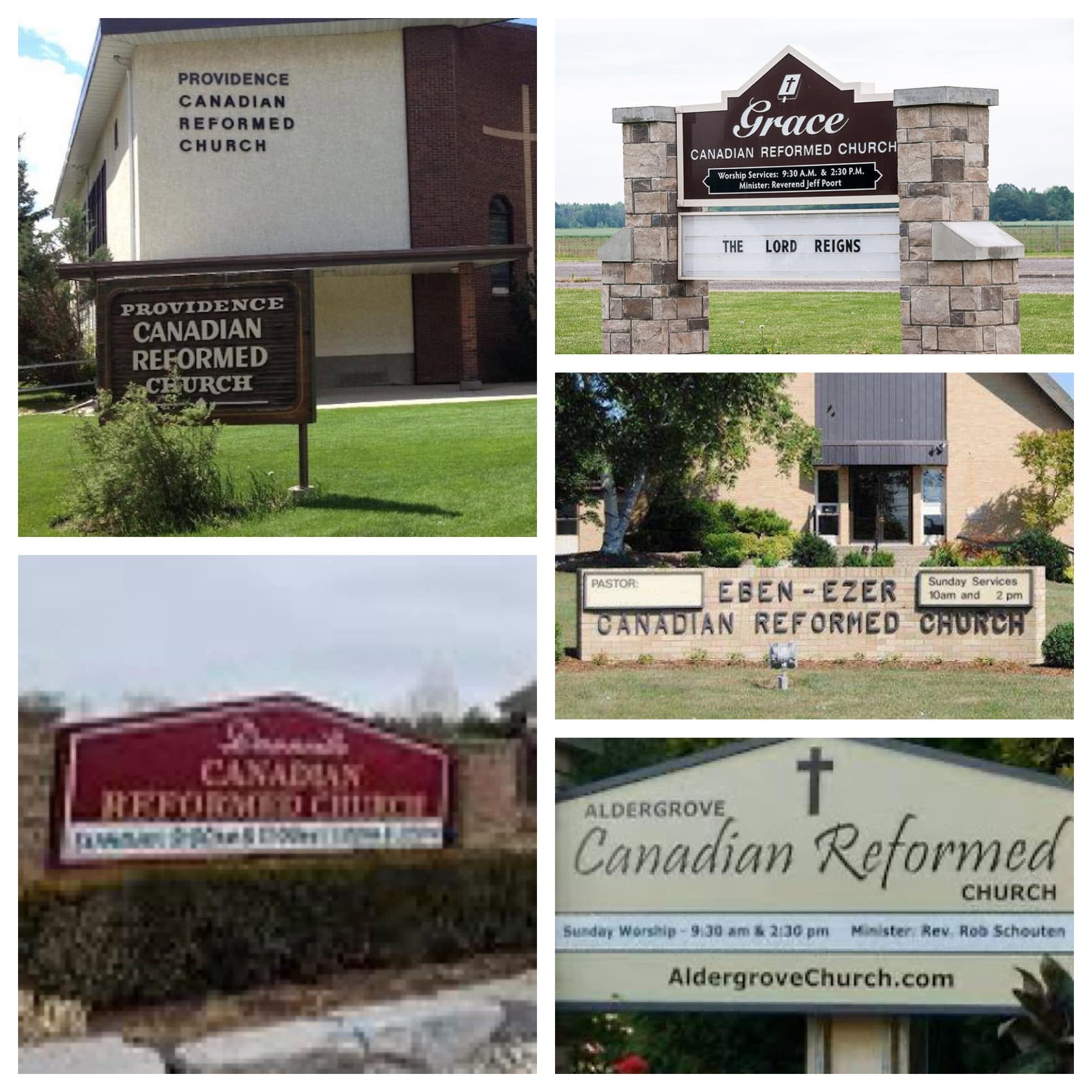
In our communities, many churches have generic names, such as Fellowship, Community Church, or just Christian Church (𝘢𝘭𝘵𝘩𝘰𝘶𝘨𝘩 𝘐 𝘵𝘩𝘪𝘯𝘬 𝘢𝘭𝘭 𝘤𝘩𝘶𝘳𝘤𝘩𝘦𝘴 𝘢𝘳𝘦 𝘭𝘪𝘬𝘦𝘭𝘺 “𝘊𝘩𝘳𝘪𝘴𝘵𝘪𝘢𝘯”…). Why do our churches have “Reformed” in their name? Dr. Michael Kearney makes valuable remarks in the Nov/Dec 2024 edition of Outlook:
“It is fascinating to consider how Christian denominations label themselves.
- Some names are based on 𝐠𝐞𝐨𝐠𝐫𝐚𝐩𝐡𝐢𝐜𝐚𝐥 𝐨𝐫𝐢𝐠𝐢𝐧: Roman Catholic, Eastern Orthodox, Anglican, and so on.
- Other denominations associate themselves with the 𝐧𝐚𝐦𝐞 𝐨𝐟 𝐚 𝐩𝐚𝐫𝐭𝐢𝐜𝐮𝐥𝐚𝐫 𝐩𝐞𝐫𝐬𝐨𝐧: Lutheran or Mennonite, for instance.
- Some denominations identify themselves in terms of 𝐨𝐫𝐠𝐚𝐧𝐢𝐳𝐚𝐭𝐢𝐨𝐧𝐚𝐥 𝐬𝐭𝐫𝐮𝐜𝐭𝐮𝐫𝐞: Presbyterian, Congregational, and the like.
- Others claim a particular 𝐝𝐨𝐜𝐭𝐫𝐢𝐧𝐚𝐥 𝐭𝐞𝐧𝐞𝐭, such as Baptist or Seventh-Day Adventist churches.
Have you ever considered where 𝐑𝐞𝐟𝐨𝐫𝐦𝐞𝐝 churches fall in this naming scheme? We are not named for a person (although we might call ourselves Calvinists.) Nor are we named for a single characteristic doctrine or a unique structure of church government. Rather, our name denotes a 𝐩𝐫𝐢𝐧𝐜𝐢𝐩𝐥𝐞 𝐨𝐟 𝐫𝐞𝐟𝐨𝐫𝐦𝐚𝐭𝐢𝐨𝐧. 𝘛𝘩𝘦 𝘱𝘳𝘪𝘯𝘤𝘪𝘱𝘭𝘦 𝘰𝘧 𝘳𝘦𝘧𝘰𝘳𝘮𝘢𝘵𝘪𝘰𝘯 𝘳𝘦𝘲𝘶𝘪𝘳𝘦𝘴 𝘵𝘩𝘢𝘵 𝘢𝘭𝘭 𝘰𝘶𝘳 𝘭𝘪𝘷𝘦𝘴, 𝘪𝘯𝘥𝘪𝘷𝘪𝘥𝘶𝘢𝘭𝘭𝘺 𝘢𝘯𝘥 𝘤𝘰𝘭𝘭𝘦𝘤𝘵𝘪𝘷𝘦𝘭𝘺, 𝘰𝘱𝘦𝘳𝘢𝘵𝘦 𝘶𝘯𝘥𝘦𝘳 𝘵𝘩𝘦 𝘣𝘪𝘣𝘭𝘪𝘤𝘢𝘭 𝘤𝘢𝘭𝘭𝘴 𝘧𝘰𝘳 𝘳𝘦𝘱𝘦𝘯𝘵𝘢𝘯𝘤𝘦, 𝘳𝘦𝘯𝘦𝘸𝘢𝘭, 𝘢𝘯𝘥 𝘳𝘦𝘷𝘪𝘷𝘢𝘭.
This principle of reformation should keep our churches humbly reliant upon their God and Savior, and that principle should drive us to search the Scriptures constantly to have our beliefs and practices either confirmed or corrected.” [Emphasis added]
What a fantastic description of why we have “Reformed” in our name and how we differ from churches with other names. Our church name communicates that it matters who we believe Jesus is. By just mentioning our church’s name, we give a testimony of our principles. Our Reformed name clarifies our relevance in today’s culture without looking alike. Our Reformed name is distinct, thought-provoking, meaningful, requires accountability, and places God and Scripture centrally.